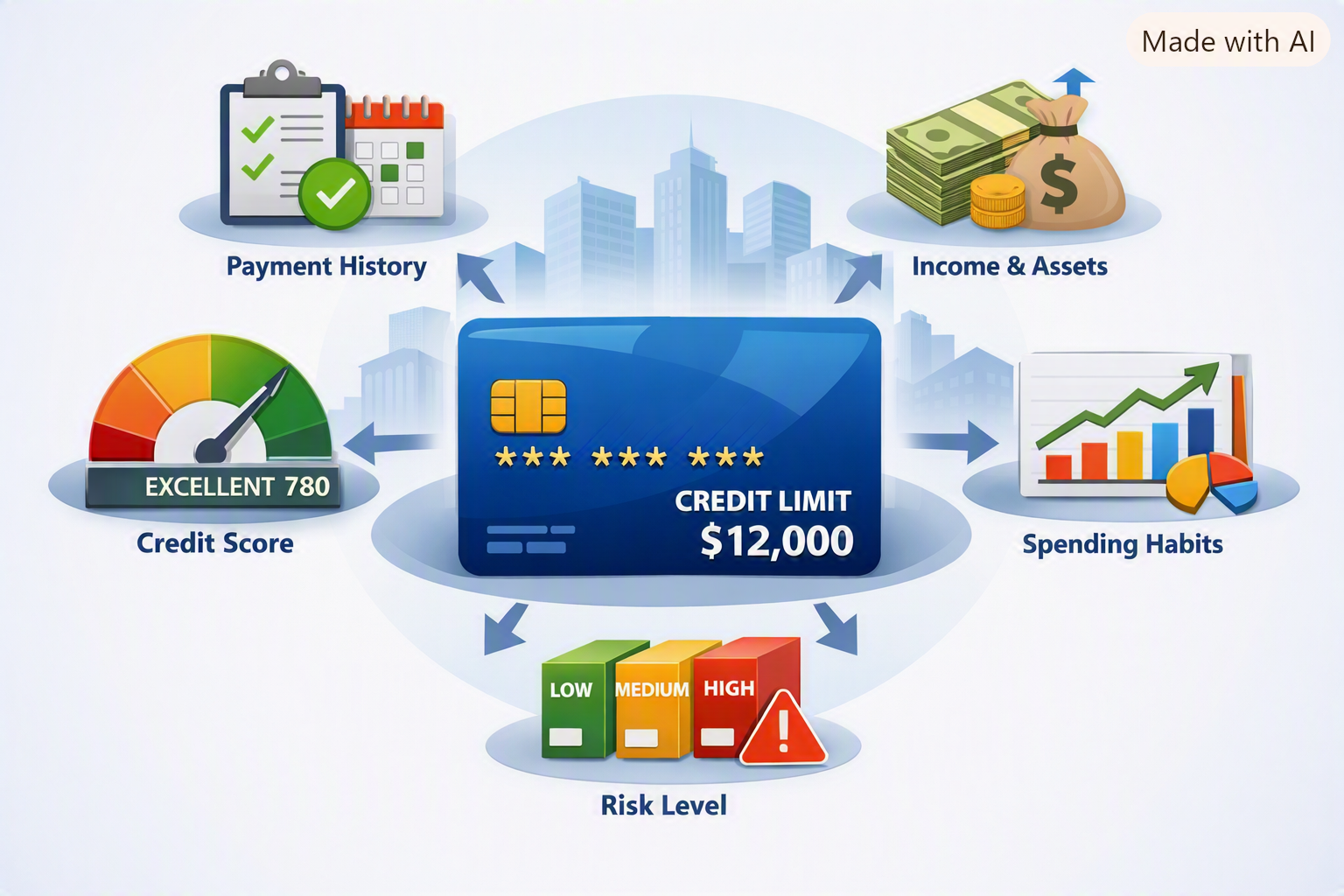
Understanding how banks decide credit limits gives you a major advantage when trying to grow your available credit. Although many people assume credit limit increases are random, lenders follow predictable internal scoring systems, risk models, and behavioral patterns. When you understand these mechanics, you can build a profile that earns automatic increases over time.
To learn more about how credit scoring works, the Consumer Financial Protection Bureau provides helpful guidance at https://www.consumerfinance.gov.
Understanding how banks decide credit limits helps you predict when increases will happen.
Why Banks Increase Credit Limits
Banks raise credit limits when they believe a customer is low‑risk and profitable. A higher limit signals trust, and lenders only extend more credit when your behavior shows stability. Because of this, banks closely monitor your spending patterns, payment history, and overall account management.
If you want deeper strategies for growing limits, explore our Credit Limit Growth category.
How Banks Decide Credit Limits: Key Factors
These internal scoring systems explain how banks decide credit limits for every customer.
Internal Scoring Systems Banks Use
Banks do not rely solely on your FICO score. Instead, they use internal scoring systems that evaluate your behavior over time. FICO explains how credit scoring works at https://www.fico.com.
1. Payment Behavior
Banks track:
- On‑time payments
- Early payments
- Full vs minimum payments
- Consistency over months
Perfect payment behavior is one of the strongest signals for a higher credit limit.
2. Utilization Patterns
Lenders analyze your utilization trends, not just your current balance. They look at:
- How often you carry a balance
- Whether you spike your usage
- How quickly you pay down charges
- Whether your utilization stays stable
Low, predictable utilization leads to better internal scoring.
For more on utilization, see our Credit Score Optimization category.
3. Account Age and Relationship
Banks reward long‑term customers. If you have multiple accounts with the same bank, your chances of receiving higher credit limits increase.
4. Income and Spending Behavior
Banks evaluate your spending patterns and income updates. When your income increases, lenders often re‑score your account.
5. Risk Buckets
Every bank places customers into internal risk buckets:
- Low risk
- Moderate risk
- High risk
Your bucket determines how much credit the bank is willing to extend.
Experian explains risk factors in more detail at https://www.experian.com.
Once you know how banks decide credit limits, you can time your behavior to match their review cycles.
The 90‑Day Rule for Limit Increases
Most banks evaluate accounts every 90 days. This is why new accounts rarely receive increases before the three‑month mark. After 90 days of perfect behavior, your chances of receiving a higher limit improve significantly.
If you plan to request a manual increase, wait until you have at least 90 days of:
- On‑time payments
- Low utilization
- Active card usage
This timing aligns with the bank’s internal review cycle.
Soft Pull vs Hard Pull Increases
Soft Pull Increases
Soft pulls do not affect your credit score. They are often used for smaller increases or automatic reviews.
Hard Pull Increases
Hard pulls appear on your credit report. They are used for larger increases or when the bank needs more data.
For issuer‑specific behavior, check our Banking & Cards category.
How to Build a Profile That Earns Automatic Increases
Higher limits come from consistent, low‑risk behavior. Banks reward:
1. Utilization Under 10%
This is the ideal range for risk scoring.
2. Early Payments
Early payments reduce risk and improve internal scoring.
3. Updated Income
Income updates trigger internal reviews.
4. Regular Card Usage
Inactive accounts rarely receive increases.
5. Perfect Payment History
One late payment can freeze limit growth for up to two years.
Consistent behavior is the strongest factor in how banks decide credit limits over time.
Why Consistency Matters
Banks reward predictable behavior. When your spending, payments, and utilization remain stable, lenders classify you as low‑risk and more likely to qualify for higher credit limits. Because banks evaluate accounts continuously, consistent behavior over time becomes the strongest predictor of future credit limit increases across all lender scoring systems. Over time, stable patterns trigger automatic reviews that lead to increases without needing to request them manually.
Leave a Reply